How to Use Intent Signals to Increase Your Conversion Rates

On this page
TL;DR: Key Takeaways
- Intent signals are public data points (job postings and UGC reviews) that reveal which companies use specific software tools
- Companies already using your competitor's tool convert at 5–15× higher rates than cold lists because they're pre-qualified buyers
- The best signals come from ATS public APIs (Greenhouse, Lever) and review platforms (G2, Capterra, Reddit)
- Lead outreach with one specific signal reference and your single strongest advantage, not a feature list
- Filter signals by recency (last 90 days) and match your advantage to the context of each signal
- Reply rates of 8–20% are achievable vs. 1–3% for typical cold outreach when targeting is signal-based
What Is an Intent Signal?
An intent signal is any public piece of data that suggests a company is actively engaged with (or evaluating) a specific type of software. Unlike demographic data (company size, industry, location), intent signals reveal behavior: what tools a company actually runs today.
The two most powerful signal types are:
- Job postings. When a company posts a role requiring experience with "HubSpot," "Salesforce," or "Intercom," they're publicly declaring their tech stack. Job descriptions are unintentional but highly accurate tech stack disclosures.
- User-generated content (UGC). G2 reviews, Capterra reviews, and Reddit threads where employees mention specific tools are direct, named confirmations, not inferred, but stated outright.
Together, these two sources give you a highly accurate picture of which companies use which tools, without any licensed data, without buying contact lists, and without guessing.
Why Competitor Users Are Your Best Prospects
Think about what you already know when you reach out to a company actively using a direct competitor:
- They have already bought into the category. You don't need to educate them on why they need the product; they're already sold on that.
- They have a budget allocated. It's currently being spent somewhere. Your job is to show them where it should be spent instead.
- They have real pain points. Every tool has limitations. Dissatisfied users actively look for alternatives, often without ever mentioning it publicly.
- You have context for your message. "I noticed you use [Competitor] for X" is a completely different opener than "Hope this finds you well." One is specific; one is noise.
This is why outreach to competitor users consistently converts at 5–15× the rate of cold lists. The prospect doesn't feel like a cold contact, because for you, they're not.
Real-World Example:
A Head of Growth at a Series A SaaS company sent 200 emails to companies using a direct competitor: same sequence, same rep, just different targeting. They received 28 replies in the first week. Their previous cold campaign to an unfiltered list generated 4 replies from 200 sends. Same effort. 7× the result. That's the whole difference.
Where to Find Intent Signals
1. Job Postings via ATS APIs
Applicant tracking systems like Greenhouse and Lever expose fully public JSON APIs for every open role. A company posting a role that reads "3+ years of Salesforce administration experience required" is telling you (for free) exactly what tools they run.
The key insight: this isn't buried in HTML. The Greenhouse jobs API returns full job description text in structured JSON that anyone can query. Run basic NLP over the text, match it against a dictionary of tool names, and you have a verified tech stack signal, tied to a real company, with a timestamp.
Signal strength: Very high. Recent job postings (last 90 days) confirm active tool usage with nearly 100% accuracy.
2. G2 and Capterra Reviews
Review platforms are gold for intent signals. When someone leaves a review for a tool, they typically mention what they use it alongside, what they switched from, and what they wish it did better. All of this is public, indexed, and searchable.
A Salesforce review that says "we migrated from HubSpot last year" is a signal for both Salesforce-adjacent products and the HubSpot replacement market. Co-mention patterns are especially powerful for positioning your switch pitch.
3. Reddit and Community Signals
Subreddits like r/salesforce, r/hubspot, r/notion, and hundreds of tool-specific communities are filled with employees discussing their stack. These signals are softer than job postings but often reveal intent earlier: someone asking "is there a better alternative to Pipedrive?" is in active evaluation mode before any job post would reflect it.
| Signal Source | Accuracy | Recency | Scale |
|---|---|---|---|
| ATS Job Postings | Very high | Days | Millions of posts |
| G2 / Capterra Reviews | Very high | Weeks to months | Thousands per tool |
| Reddit Discussions | Medium | Days to hours | Tool-dependent |
| Cold Contact Lists | Very low | Often stale | High volume |
How to Turn Signals Into Outreach That Converts
Step 1: Find companies using the right competitor
Start with one specific competitor, ideally one where you have a clear, articulate advantage. Search for companies using that tool. This takes minutes with the right tooling, not days of manual research.
Step 2: Filter by recency
A job posting from two years ago is a weaker signal than one from last month. Prioritize companies where the signal is recent: within the last 90 days. Fresh signals indicate the tool is actively in use and the team is growing, which means more potential seats and more motivated stakeholders.
Step 3: Match your advantage to the signal context
Don't lead with a feature list. Lead with the single thing you do better than the tool they already use. Prepare 3–5 key advantages per competitor and rotate based on signal context:
| Your Advantage | Best Signal Context to Use It |
|---|---|
| 40% lower cost at the same tier | Startup or Series A company, cost-sensitive signals |
| No seat-based pricing, unlimited users | Job posting shows a large team being hired |
| Native integration with [tool they also use] | UGC signal shows complementary tool usage |
| Migrate in under 48 hours with full data port | G2 review shows frustration with the competitor |
Step 4: Write the message
Here is what a signal-based opening looks like in practice:
Example outreach message
Hey [Name], saw [Company] is hiring a HubSpot admin. Looks like you're scaling your CRM operations. We work with teams that have outgrown HubSpot's contact limits and want [your key advantage]. Worth a 10-minute call to see if there's a fit?
Notice the structure: one signal reference (the job posting), one implied problem (scaling CRM), one specific advantage, one low-commitment ask. That's all you need. The specificity is what earns the reply.
The shortcut
Intent signals get the right prospect to your page. An AI agent makes sure they don't leave without converting.
Signal-based outreach brings warm, high-intent prospects to your site. But even a pre-qualified visitor will bounce if they hit a static page with no one to talk to. A custom AI agent closes that gap, engaging the visitor the moment they land, while their intent is highest.
- ✓Engages warm prospects immediately: when someone lands from a targeted campaign, the agent opens a conversation specific to their context, not a generic "can I help you?"
- ✓Handles the competitor comparison on the spot: answers "how are you different from [Competitor]?" in real time, with your best arguments, every time
- ✓Books the meeting while intent is hot: instead of sending a warm prospect to a Calendly link, the agent qualifies and schedules directly in the conversation
- ✓Captures the ones who weren't ready yet: collects name and email from exit-intent visitors so your signal-sourced prospect list doesn't leak
We build, deploy, and host the agent. You keep running the signals and watch the pipeline grow.
Sign up free →Measuring the Impact
When you switch from cold lists to intent-based targeting, track these metrics across your first 30 days to validate the approach:
| Metric | Cold Outreach | Intent-Based |
|---|---|---|
| Reply rate | 1–3% | 8–20% |
| Qualified meetings booked | 0.5–1% | 4–8% |
| Time to first reply | 7–14 days | 1–3 days |
| Pipeline predictability | Low | Much more consistent |
The reply rate improvement is the leading indicator. If your intent-based campaigns significantly outperform your historical cold benchmarks, the targeting is working. From there, dig into which signals (job posting vs. UGC, which competitor, which role type) generate the best results, and double down on those categories.
Common Mistakes to Avoid
| Mistake | Why It Hurts | Fix |
|---|---|---|
| Using stale signals | A 2-year-old job post doesn't mean they still use the tool | Filter for last 90 days only |
| Pitching features | They already know what tools in this category do | Lead with your advantage over their current tool |
| Wrong person | The CEO doesn't use the tool; the team does | Target the manager for the team the job post is on |
| Ignoring co-use signals | Missing a stronger angle: native integration you already have | Check what else the company uses and lead with the integration |
How to Scale Intent Signal Collection
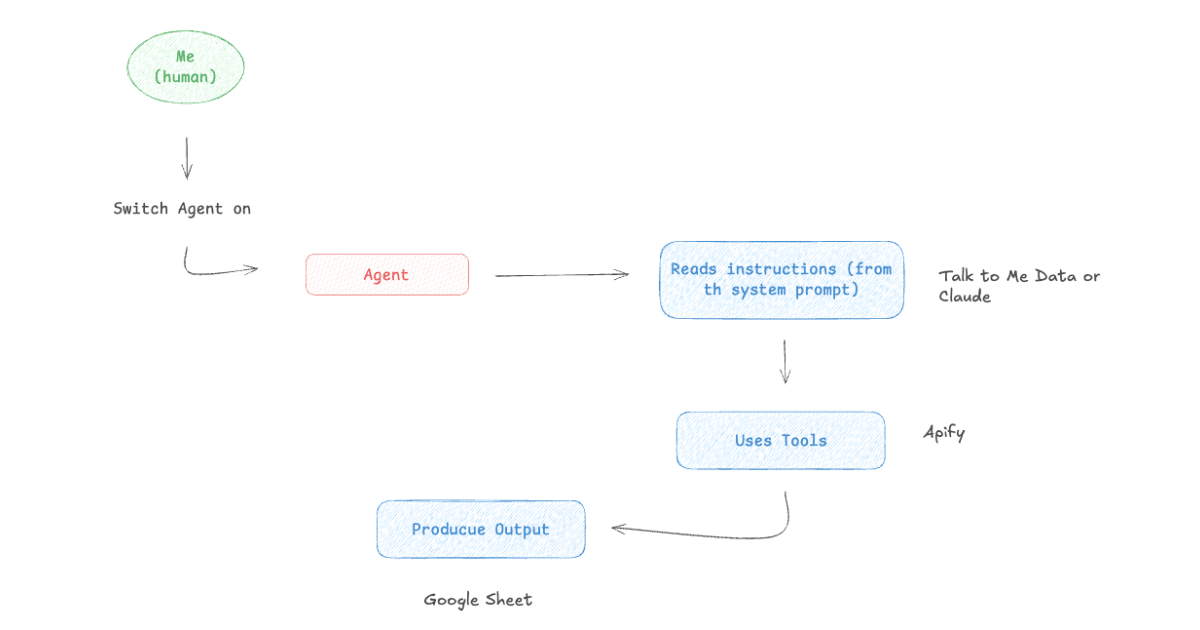
Manually searching for job postings and G2 reviews doesn't scale. Once you've validated that intent-based outreach works for your product, the next step is automating signal collection so your pipeline refreshes continuously without manual effort.
The architecture is straightforward:
- A company seed list: start with 10,000 companies from public sources (Product Hunt, Crunchbase free tier, industry directories)
- ATS detection: a script that checks whether each company's careers page links to Greenhouse, Lever, or Ashby
- Scheduled API pulls: weekly pulls from those ATS endpoints for all job descriptions
- NLP extraction: match job description text against a dictionary of SaaS tool names
- UGC scraping: rolling collection from G2 and Capterra on a weekly cadence
At scale, this gives you a continuously refreshed database of companies and the tools they use, which is exactly what Talk to me Data provides. Instead of building this pipeline yourself, you search for any SaaS tool and instantly see which companies are confirmed users, along with the specific signals that confirmed it.
The Bottom Line
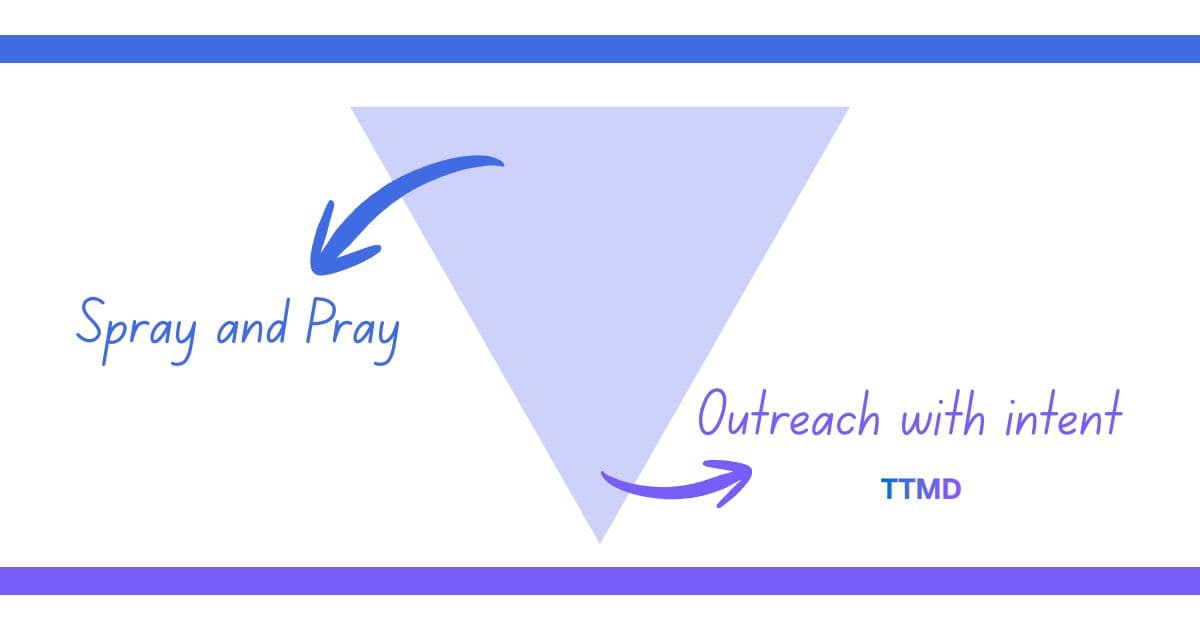
Intent signals transform sales outreach from a numbers game into a targeting game. Instead of sending 1,000 cold emails and hoping 10 people respond, you send 100 highly relevant emails to companies already using your competitor, and you get 15–20 real conversations.
The math is unambiguous: better targeting beats higher volume, every time. And with public data sources like ATS APIs and review platforms, the signal is already out there. The only question is whether you act on it before your competitors do.
Every company using your competitor is a warm prospect waiting for a better option. Intent signals tell you exactly who they are.
Frequently Asked Questions
What is an intent signal in B2B sales?
Why do companies using my competitor make better prospects?
Are job postings reliable as a tech stack signal?
How do I write outreach that actually references the signal?
How many intent signals should I collect before starting outreach?
Keep reading